EMDR: An effective Treatment

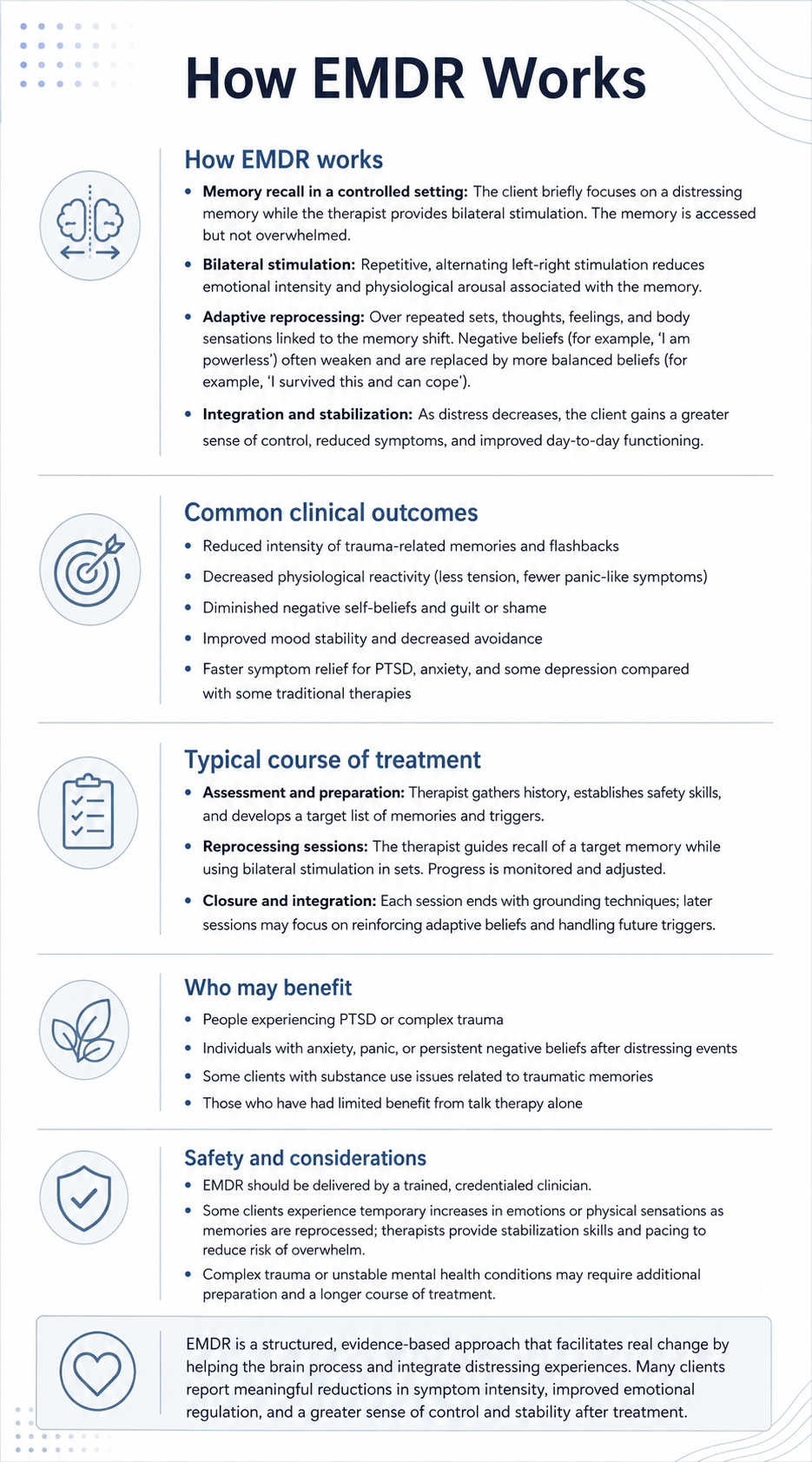
Eye Movement Desensitization and Reprocessing (EMDR) is an evidence‑based therapy that helps the brain process distressing experiences so they no longer feel as intense or disruptive. Instead of only talking through problems, EMDR uses recall of memories paired with bilateral stimulation. This helps the brain reprocess stuck experiences. For example, a client with trauma symptoms may revisit a distressing event in a controlled way, allowing emotional charge, physical tension, and negative beliefs to decrease over time, leading to a greater sense of control and stability.

EMDR is also effective for individuals dealing with ongoing stress, not just major trauma. Many working professionals carry repeated pressure, high expectations, and unresolved stress builds over time. In EMDR, we can target moments that capture that pressure, such as a situation where performance felt overwhelming or where mistakes felt costly. As those are processed, clients often report reduced reactivity, clearer thinking, and improved ability to manage stress in real time, rather than feeling constantly on edge.

EMDR can help improve relationship patterns by reducing the emotional intensity connected to past experiences that may be influencing present conversations. When unresolved stress or trauma is activated, the brain and body can respond as if there is a threat, making it harder to listen, communicate clearly, or stay connected during conflict. EMDR helps the brain reprocess these stuck experiences so emotional reactions, physical tension, and negative beliefs become less intense over time. As the nervous system becomes more regulated, clients may feel more able to pause, understand what is happening internally, and respond to partners, family members, or coworkers with greater clarity, confidence, and control.

EMDR can support goal completion by helping reduce the emotional barriers that keep people stuck, such as fear of failure, negative self-beliefs, avoidance, shame, or the sense of being overwhelmed. When past experiences or chronic stress are left unresolved, the brain and body may react to new challenges as if they are unsafe or impossible, even when the person wants to move forward. EMDR helps the brain reprocess these stuck patterns so the emotional charge becomes less intense and the person can approach goals with greater clarity, confidence, and internal stability. As distress decreases, clients may find it easier to stay focused, follow through, tolerate discomfort, and take meaningful steps toward the life they want to build.